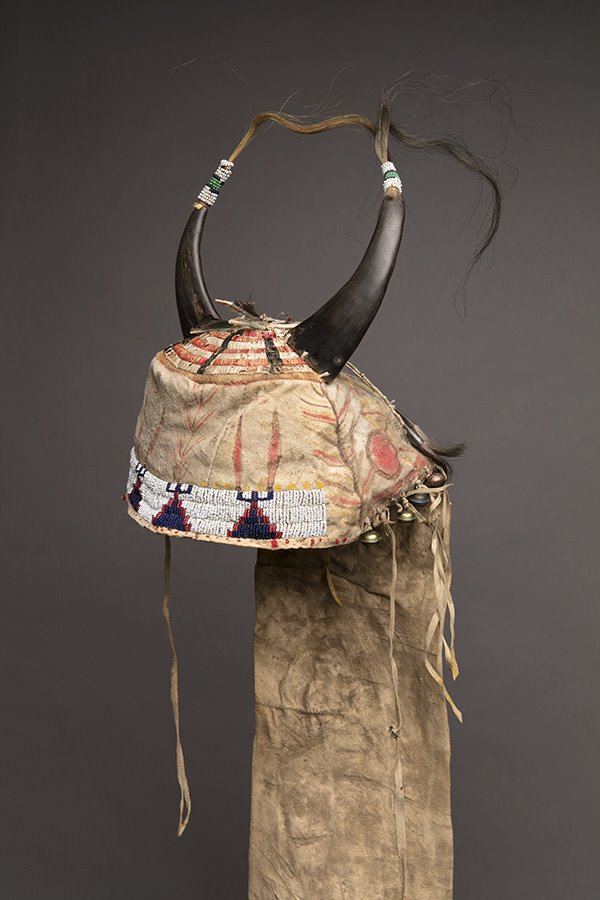
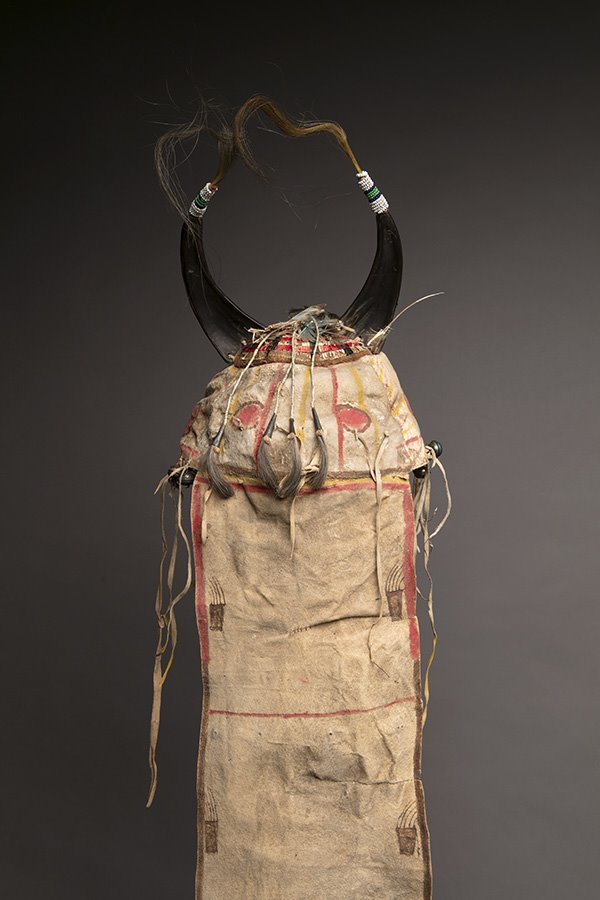
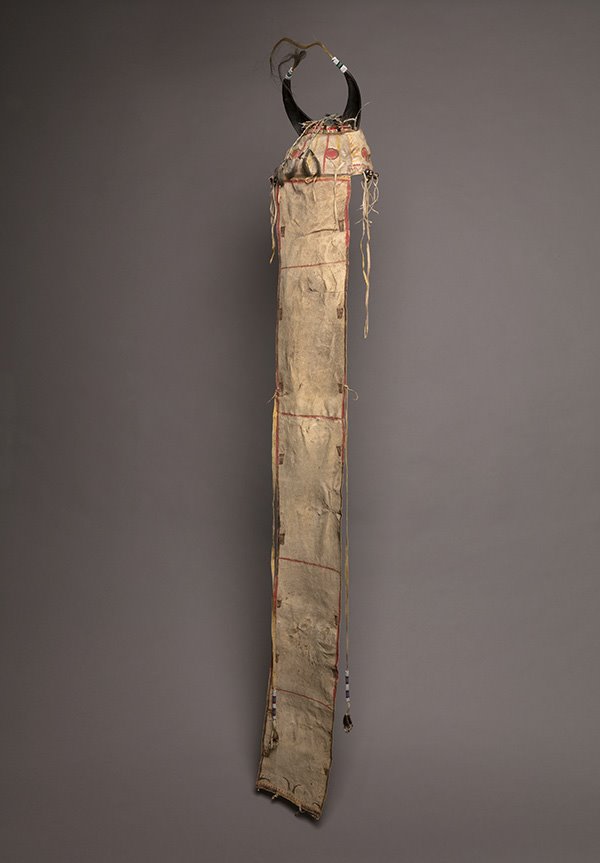
The split horn bonnet, among the most powerful forms of Plains headgear, was reserved for individuals of exceptional standing—often high-ranking chiefs or accomplished warriors. Authority was not inherited casually; it was earned through bravery, generosity, spiritual vision, and community recognition.
At the center of the cap rise two split buffalo horns. The buffalo was not simply a resource animal—it was cosmological. To wear its horns was to embody strength, endurance, and sacred connection. The horn tips are beaded and adorned with dyed horsehair, intensifying their visual impact and signaling ceremony rather than utility.
Crowning the cap is a porcupine-quilled rosette, executed with precision and restraint. Porcupine quillwork predates the widespread adoption of glass beads and represents an older Plains decorative tradition. Its presence here situates the bonnet within deep artistic lineage. Suspended from the rosette are quill-wrapped drops with tin cone dangles, introducing movement and sound. When worn, the cones would have produced a subtle metallic shimmer—announcing presence before words were spoken.
The beaded brow band anchors the composition, while the cap and full trailer are painted with medicine imagery: circles, bear paws, antelope horns. These are not decorative motifs. They reference personal visions, spiritual guardians, and protective forces. Bear paw symbols often signify strength and healing power. Antelope imagery can invoke speed and grace. Circular forms may reference cycles, continuity, or celestial authority. The imagery transforms the bonnet from status symbol into spiritual apparatus.
The trailer extends the visual authority of the wearer, trailing behind the body in motion. It is further adorned with two beaded drops, reinforcing balance and symmetry.
By the 1870s, Arapaho communities were navigating intensifying military conflict and forced relocation. Objects such as this were worn in councils, ceremonies, and moments requiring visible leadership. The bonnet did not create authority—it signaled it.
To see a split horn bonnet is to recognize that Plains power was layered: physical courage, spiritual sanction, communal acknowledgment, and artistic excellence woven into a single form.
This piece embodies all four.