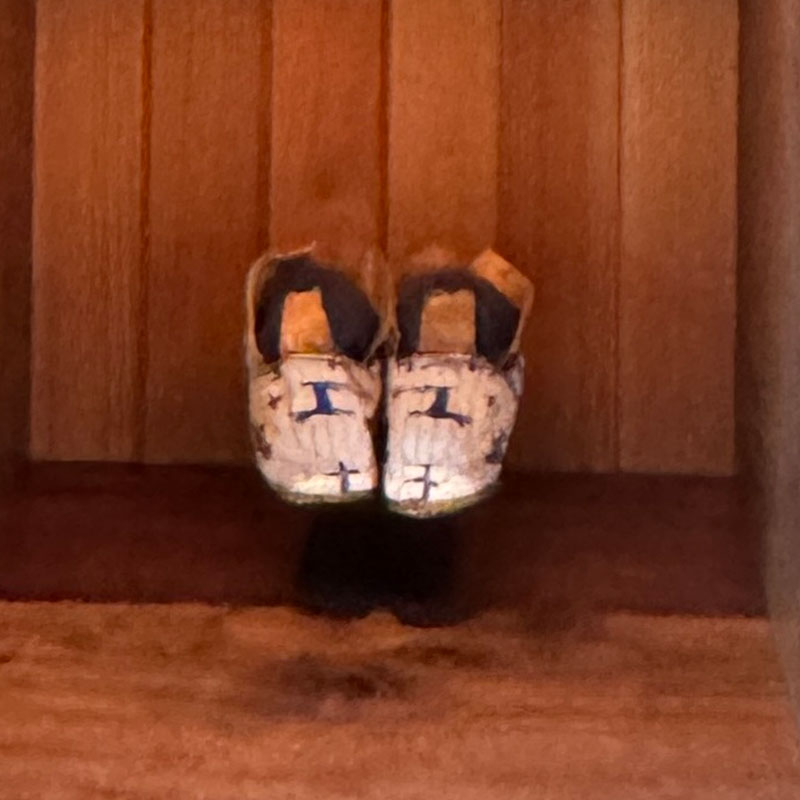
Ex. Hansen Collection
On the Plains, footwear was environmental technology.
Cheyenne moccasins were engineered for mobility across grasslands, riverbanks, and open prairie. Constructed on buffalo hide, they were flexible enough for mounted riding yet durable enough for long-distance travel. The soft sole allowed quiet movement — an advantage in both hunting and warfare.
By the 1870s and 1880s, moccasins had also become canvases of identity.
This pair features a white beaded ground with cobalt blue dog motifs on the vamps. Among Plains peoples, the dog held layered meanings — companion, protector, and in earlier periods, beast of burden before the horse became dominant. Its appearance on footwear suggests guardianship and vigilance carried with each step.
Red white-heart beads and blue crosses and diamonds further articulate Cheyenne design grammar. White-heart beads, imported trade beads with a red core, were highly valued and widely used in the late nineteenth century. Their presence situates the moccasins within expansive trade networks linking the Plains to global manufacturing centers.
The symmetry of the beadwork matters. Moccasins were often among the most intricately decorated items in a wardrobe because they were highly visible in dance, ceremony, and social gatherings. When a wearer moved, the patterns animated. The ground became stage.
Historically, Cheyenne beadwork flourished during a period of intense upheaval — military conflict, treaty negotiations, and eventual reservation confinement. As mobility across territory became restricted, the visual language of movement intensified. Even when geographic freedom narrowed, artistic expression expanded.
Moccasins are intimate objects. They absorb the imprint of the wearer. They mark passage across earth. They wear down as life unfolds.
This pair reflects a culture in motion — technologically practical, aesthetically deliberate, and socially communicative with every step taken across the Plains.