On Antelope Hide
Among the Cheyenne and many other Plains nations, the pipe was a covenant object. It was carried into treaty councils, peace negotiations, alliances, and sacred ceremonies. Words spoken in its presence carried spiritual weight.
The pipe bag protected that instrument.
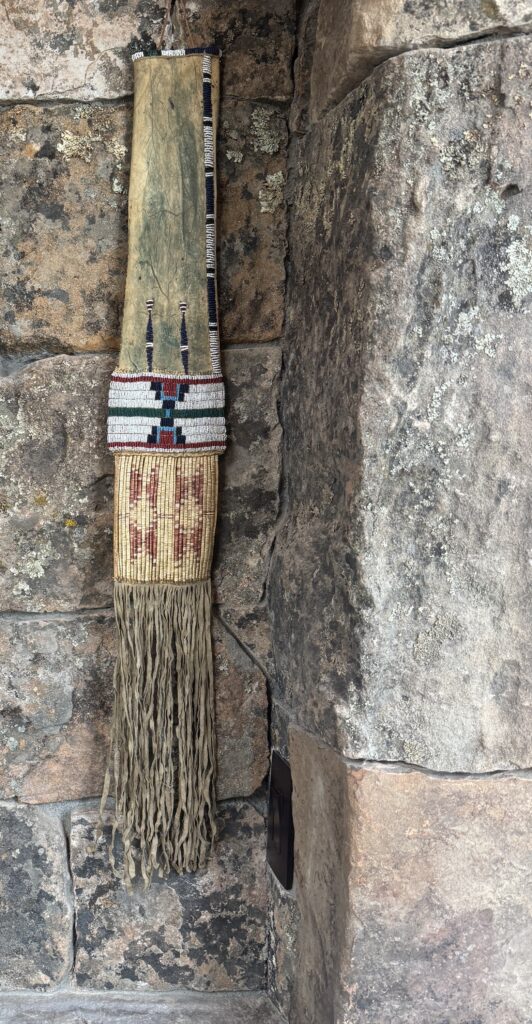
Constructed of antelope hide and washed in natural blue and green pigments over an ochered ground, this bag reflects both aesthetic discipline and ritual care. The body and neck are decorated with classic Cheyenne bead colors and geometric patterning, asserting tribal identity even within sacred space.
Below the body of the bag are quilled parfleche slats — a striking structural and visual element. Parfleche, typically associated with storage containers, here becomes part of ceremonial regalia. The use of quillwork — a technique predating widespread bead adoption — signals continuity with older artistic traditions. Even in 1870, beadwork and quillwork often coexisted, reflecting layered histories rather than replacement.
Abundant fringe extends from the base. Movement mattered in pipe ceremony. As the pipe was handled, raised, or presented, fringe animated the object, making it visually alive.
Historically, pipe bags were carried by individuals entrusted with spiritual and political authority. Pipes were invoked in peace-making, war alliances, adoption ceremonies, and intertribal diplomacy. Refusal to honor a pipe agreement carried profound moral consequence.
By 1870, Cheyenne communities were engaged in treaty negotiations under increasing federal pressure. The pipe remained central to Indigenous diplomatic systems even as U.S. treaty processes operated under very different legal assumptions. The contrast between these systems would shape the late nineteenth century.
This bag, therefore, represents more than craftsmanship. It is part of a ceremonial apparatus that governed law, alliance, and sacred obligation.
Where cartridge belts signal armed readiness,
pipe bags signal relational accountability.
Together, they frame two parallel systems of power operating on the Plains.