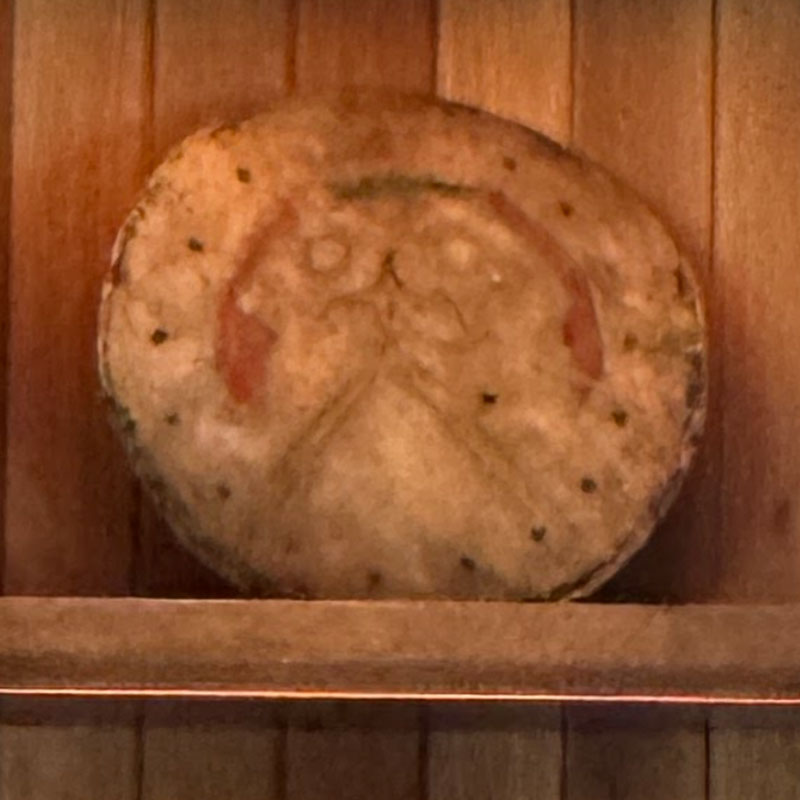
On the Plains, a shield was not simply protection from weapons. It was protection granted through vision.
Constructed of thick buffalo rawhide, this Southern Cheyenne shield reflects the material logic of the buffalo-centered world. Rawhide, when properly prepared and dried, becomes rigid and resilient — capable of deflecting arrows and, at times, even glancing firearm shots. Yet the physical strength of the shield was only part of its power.
The painted cover, executed in natural pigments, carries thunderbird imagery, crescents, and hail marks. These are not decorative motifs. Plains shields were typically created under the guidance of a vision — often received during fasting or ceremonial seeking. The imagery painted onto the shield represented the spiritual ally revealed in that experience. To carry such a shield was to carry a relationship with a supernatural force.
Thunderbirds were associated with storm power and celestial authority. Crescents and hail marks evoke sky phenomena and directional forces. Together, they place the shield within a cosmological framework where the sky world intervenes in human conflict.
The presence of an early bullet hole on the lower left — piercing both shield and cover — is historically significant. By the 1860s, firearms were reshaping warfare on the Plains. Shields, originally engineered for arrow and lance combat, were now confronting industrial projectiles. The bullet hole marks that transitional moment materially. It is evidence of use in a rapidly changing battlefield environment.
For Cheyenne warriors, shields were deeply personal objects. They were not interchangeable equipment. They were bound to the individual through ceremony, paint, and prayer. A damaged shield was not necessarily discarded; it bore witness to survival.
This example stands at the intersection of two forces: enduring spiritual warfare traditions and the technological escalation of the mid-nineteenth century.
It is both cosmology and impact.