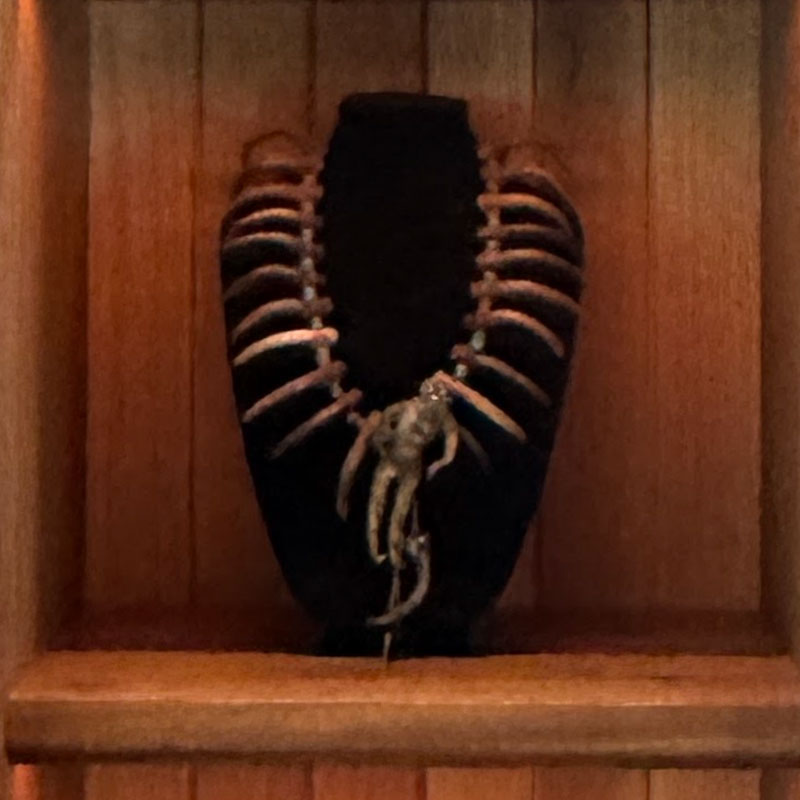
Ex. Forrest Fenn Collection
On the northern Plains, few animals commanded more respect than the grizzly bear. It embodied strength, endurance, and fearlessness. To confront one was dangerous; to survive such a confrontation carried immense social weight.
Grizzly claw necklaces were not ornamental jewelry. They were declarations of encounter.
This Crow example features claws carved from elk antler, including detailed knuckle forms, strung on original hide thong. Red ocher stains the underside of each claw, reinforcing associations with life force, vitality, and warfare. The repetition of claw forms across the chest would have created a powerful visual presence when worn.
Historically, acquiring authentic grizzly claws required either killing the animal or inheriting the claws from someone who had done so. Even when carved substitutes were used, the form itself invoked the bear’s attributes. Among Plains peoples, power could be transferred symbolically through form and ritual association.
At the base of the necklace hangs a small human hide effigy stuffed with buffalo hair. Such effigies often represented an enemy — sometimes specifically one who had been killed. Whether symbolic or literal, the presence of this figure places the necklace firmly within the sphere of warrior achievement.
By 1870, Crow warriors operated within a landscape of intertribal conflict and shifting alliances. Personal reputation determined influence. Objects worn on the body functioned as portable biographies. A necklace such as this communicated encounters with danger, acquisition of power, and participation in warfare.
Grizzly bear symbolism also carried spiritual resonance. In some Plains traditions, the bear was associated with healing knowledge and protective strength. Thus the necklace could function as both martial declaration and spiritual shield.
This object type embodies earned power — drawn from animal, from enemy, and from survival itself.
It is reputation worn at the throat.