Big Horn Sheep Hide
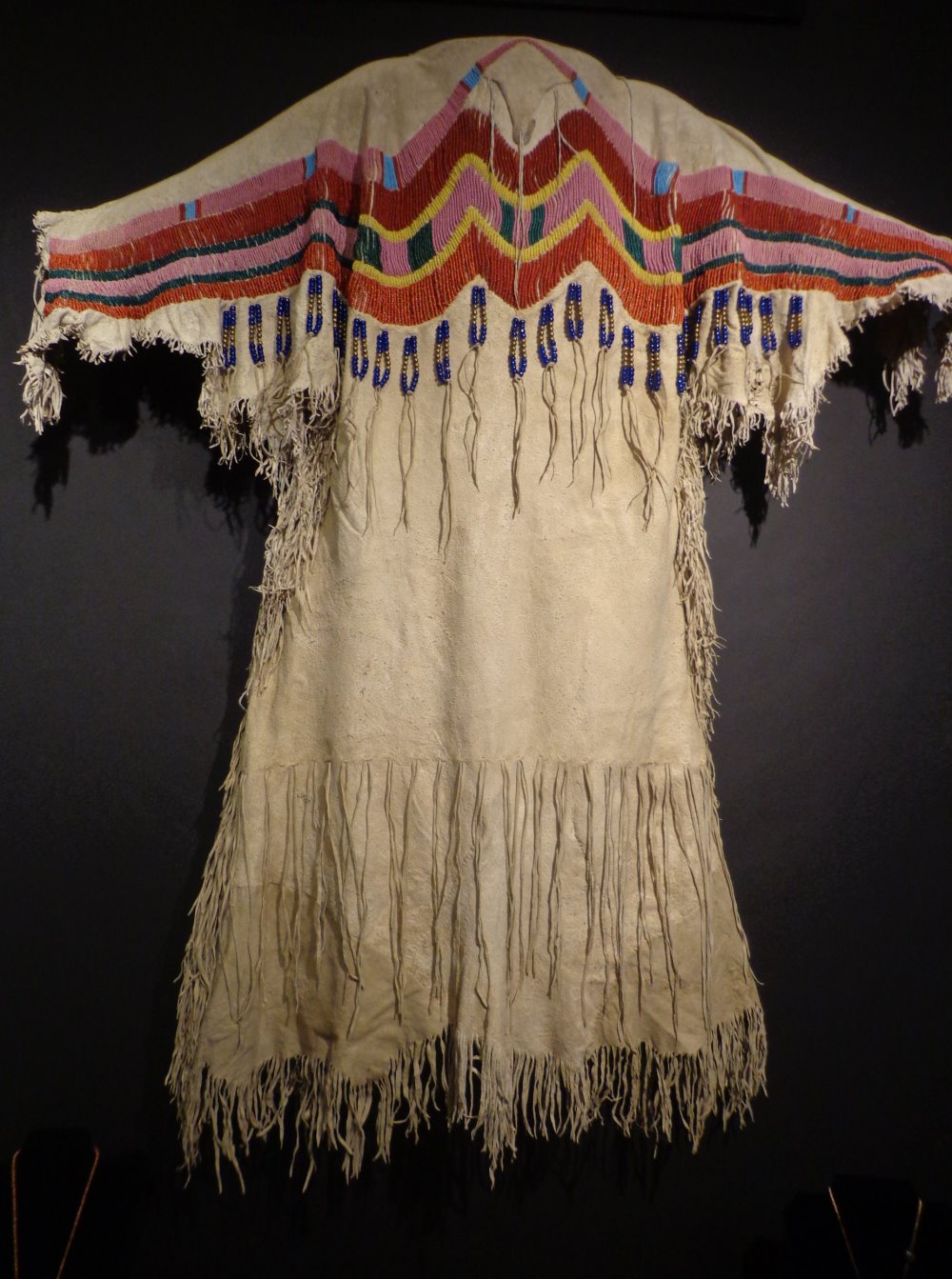
Among the Nez Perce of the Plateau region, women’s dresses were central expressions of identity, artistry, and social presence. This example, constructed of big horn sheep hide, reflects both material selectivity and technical skill. Sheep hide is lighter and more pliable than buffalo, allowing for a flowing silhouette and extensive fringe.
The fully beaded yoke is composed of early pony beads — small, opaque glass trade beads introduced through Euro-American trade networks in the nineteenth century. Pony beads predate the widespread use of smaller seed beads and create bold, graphic surfaces due to their scale and color density.
The color palette — red, yellow, and blue — reflects Plateau beadwork traditions emphasizing strong contrast and balanced symmetry. The yoke forms the visual focal point of the garment, framing the upper torso and drawing attention to the wearer’s face and posture.
Cobalt blue and brass beaded drops hang along the lower edge of the yoke. Beaded drops introduce motion and light reflection during movement, especially in dance or ceremony. The abundant fringe below the yoke and along the hem amplifies that motion, transforming stillness into animation.
Remnants of big horn sheep tail below the neckline indicate retention of original hide features, a detail that may have held aesthetic or symbolic meaning.
Dresses of this type were worn during gatherings, ceremonies, and public events. Women’s regalia on the Plateau was not secondary ornamentation — it was a primary visual language of community identity, craftsmanship, and intertribal exchange.
This garment represents the intersection of trade materials and Indigenous design authority.
Glass beads may have traveled from afar,
but the pattern language is distinctly Nez Perce.
It is textile, trade, and tradition shaped into a moving surface of color.