The pipe tomahawk emerged in the eighteenth century as a trade form introduced by European metalworkers and quickly absorbed into Indigenous Plains cultures. By the mid-nineteenth century, it had become both a functional weapon and a ceremonial object.
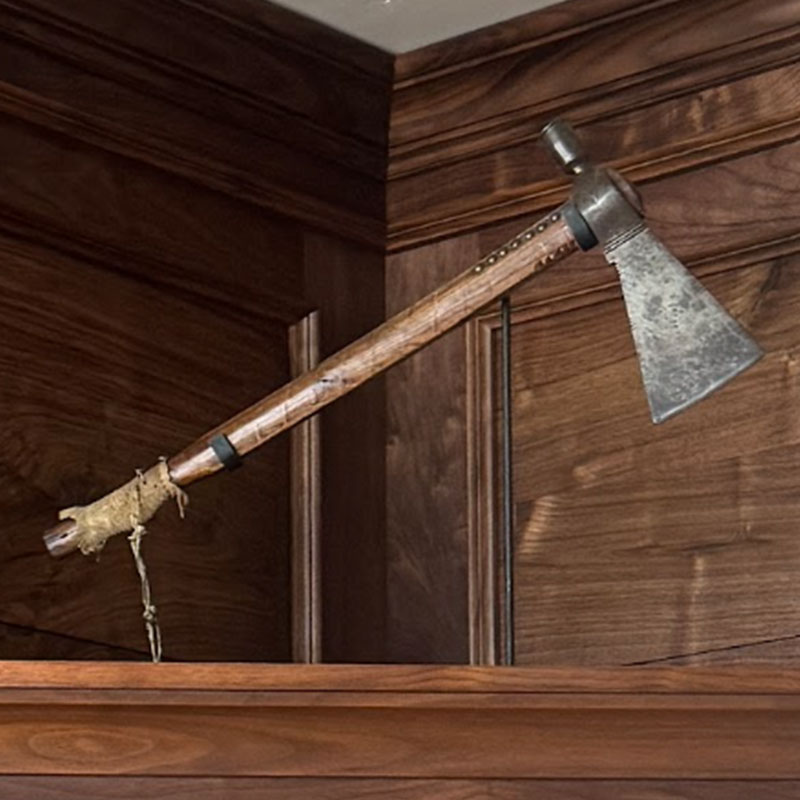
This example features a forged iron head incised with lines and stars on one side and dotted designs arranged in a tipi formation on the other. Such engraving reflects both decorative intent and symbolic reference. The bowl of the head is scalloped along the edge, an ornamental refinement that elevates the piece beyond simple utility.
The haft is file-branded and displays six curved coup marks below the head. Coup marks traditionally recorded acts of bravery in warfare, especially counting coup — striking an enemy in close combat. Their presence suggests personal history associated with the owner.
Two rows of early brass tacks decorate the haft. Brass tacks were widely used across the Plains during the nineteenth century, often forming geometric or symbolic patterns. They reflect access to trade goods while remaining fully integrated into Indigenous aesthetic systems.
The original buffalo hide grip and hide drop remain intact. Hide drops frequently enhanced grip while adding movement and visual presence.
Pipe tomahawks occupied a dual role. In warfare, they functioned as close-combat weapons. In diplomacy and council settings, the pipe element transformed the object into a smoking implement used during negotiations or ceremonies. The act of smoking carried spiritual and relational significance, reinforcing the gravity of agreements.
By the 1860s, Northern Plains societies were navigating intense military conflict and treaty negotiations with the United States. Pipe tomahawks embodied that tension: capable of violence, yet equally capable of ceremony.
This object represents authority carried in the hand — an instrument of war and a tool of treaty bound into one form.