Before glass seed beads became dominant in Plains adornment, porcupine quillwork was the primary medium for surface decoration. Quillwork required intensive preparation: quills were collected, sorted by size, softened, flattened, and dyed using natural pigments. The process demanded both technical skill and aesthetic control.
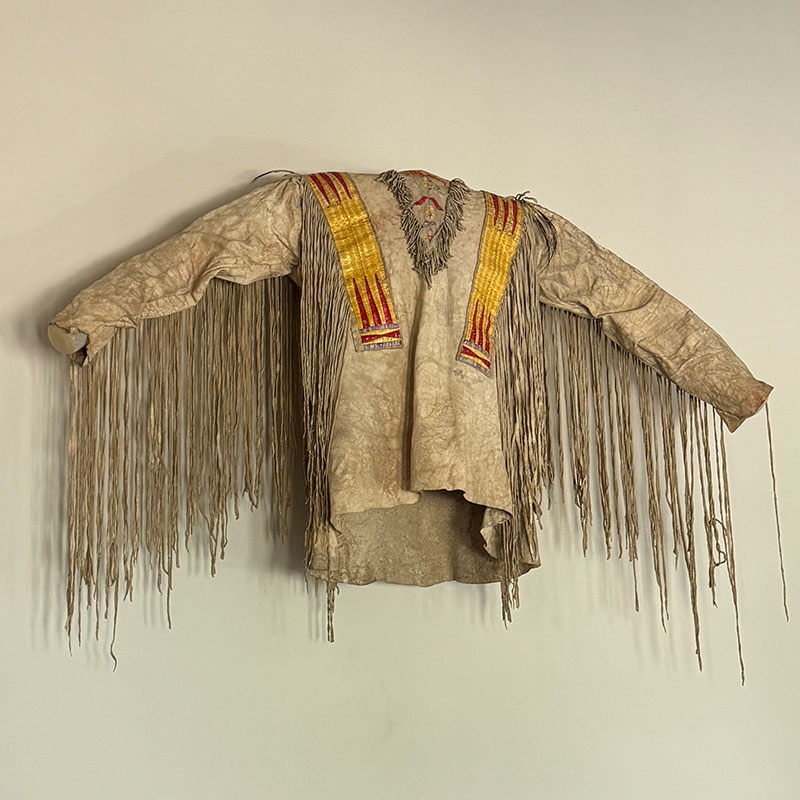
This shirt reflects that earlier tradition at a moment of transition. Constructed in classic early cut, it retains strong structural proportions associated with Sioux male regalia of the mid-nineteenth century. The buckskin body provides a supple but durable surface for applied decoration.
The quillwork is plaited and retains vivid color — evidence of both preservation and high-quality dye preparation. Plaiting (weaving quills over foundation threads or rawhide strips) creates a tight, durable surface distinct from later beadwork embroidery.
The bib features complex Sioux design elements, likely incorporating geometric motifs associated with regional visual language. Such designs could signify personal achievement, clan affiliation, or aesthetic preference, but they always reflect compositional discipline.
Abundant fringe lines the arms, shoulders, and sides. On Plains garments, fringe is not incidental. It amplifies movement and enhances the wearer’s silhouette during dance, mounted travel, or ceremonial gathering. Motion activates the garment.
Quill-wrapped hair drops decorate both shoulders. Hair drops often incorporated dyed horsehair or human hair wrapped in quills, forming tactile and visual accents. They contribute texture and dimension to the upper garment.
By 1870, Sioux communities were navigating rapid material shifts — increased availability of trade goods alongside intensifying military conflict. A quilled shirt from this period represents continuity with earlier decorative traditions even as beadwork was becoming widespread.
This garment stands at a threshold moment in Plains artistry:
Rooted in pre-contact technique.
Worn in a time of profound change.
It is both clothing and craftsmanship —
a surface built from patience, pigment, and precision.