This object was built to sit between horse and rider — and to be seen from all sides.
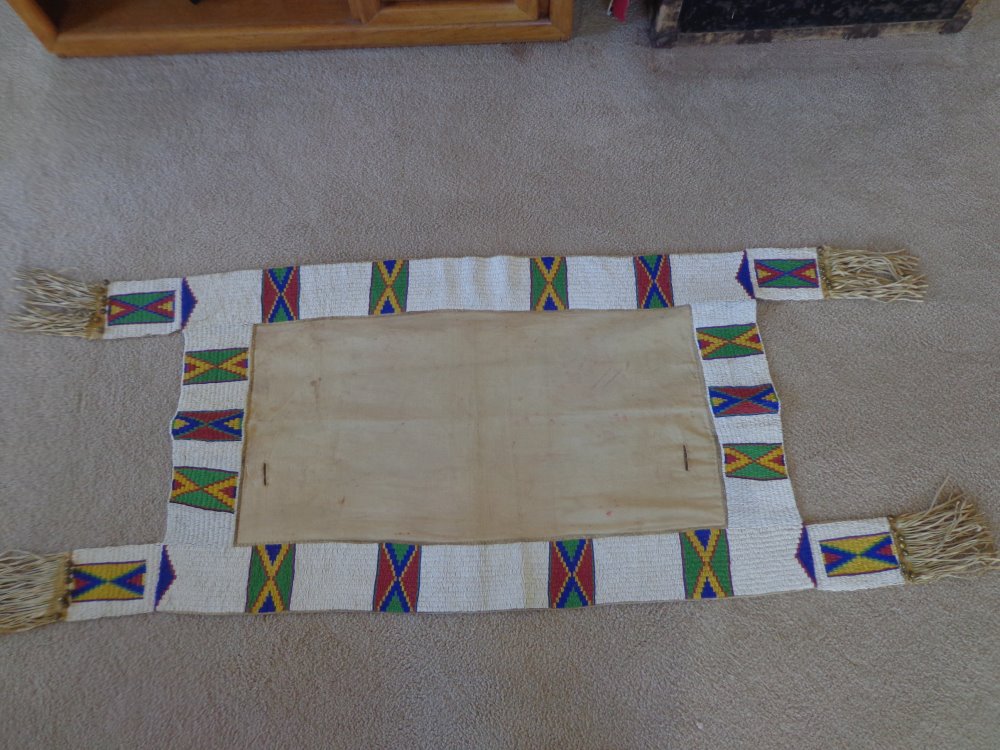
Constructed of hide with an early muslin center panel, the blanket forms a deliberate contrast between plain field and ornamented border. The muslin insert creates a quiet visual core, while the surrounding white beaded ground carries multicolored geometric designs arranged with strict symmetry. The composition reads almost architectural: a framed center bordered by rhythm.
The geometric motifs, executed in saturated colors against white beadwork, align with classic Sioux design vocabulary of the late nineteenth century — bold X-forms, stepped elements, and controlled repetition. The white background is especially demanding; it reveals precision and confidence in stitch work.
Extending from the corners and side tabs are fringe and hawk bells. These are not incidental flourishes. When mounted, the bells would have sounded subtly with the horse’s movement, transforming the saddle blanket into an auditory presence. The fringe would lift and settle with each stride, animating the geometry in motion.
Unlike garments that wrap the body, a saddle blanket operates in public space. It is displayed from horseback during gatherings, travel, or ceremony. It frames the rider without overpowering them. Its symmetry reinforces balance — visually echoing the equilibrium required in riding itself.
By the 1890s, Plains horsemanship remained central to Sioux identity despite reservation confinement. Even when mobility was restricted, equestrian culture endured symbolically and socially. A finely beaded saddle blanket became part of that visible continuity.
Measuring approximately [dimension as recorded], the blanket functions as both equipment and design field — a portable plane of pattern carried across open ground.
It rests beneath the rider, but it carries its own authority.